
How it works
A result becomes a plan becomes a visit.
Three steps, each of them something your hospital already half does. We connect them, and we count the end of the loop.
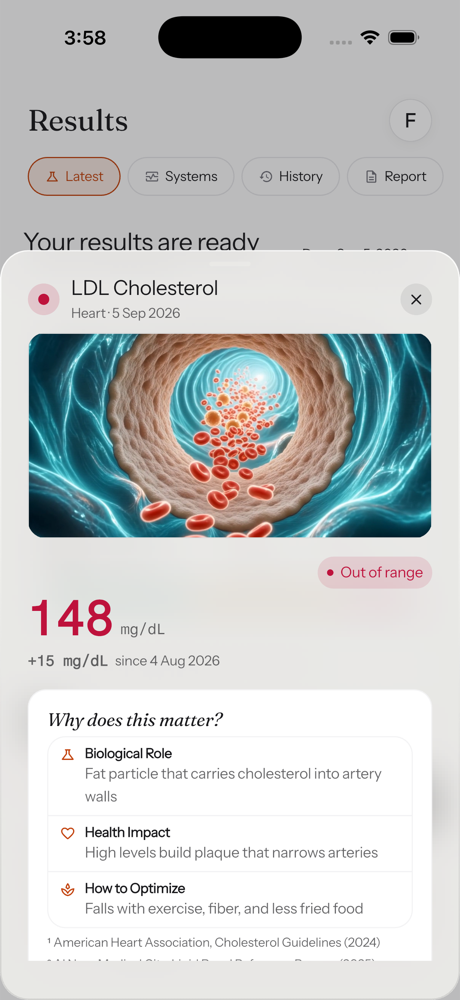
The result arrives explained
- Lab PDFs are parsed, or an HL7 or FHIR feed is read directly.
- Anything that cannot be read is quarantined for a human, never dropped.
- Each marker is written in plain words, tied to the result that produced it.
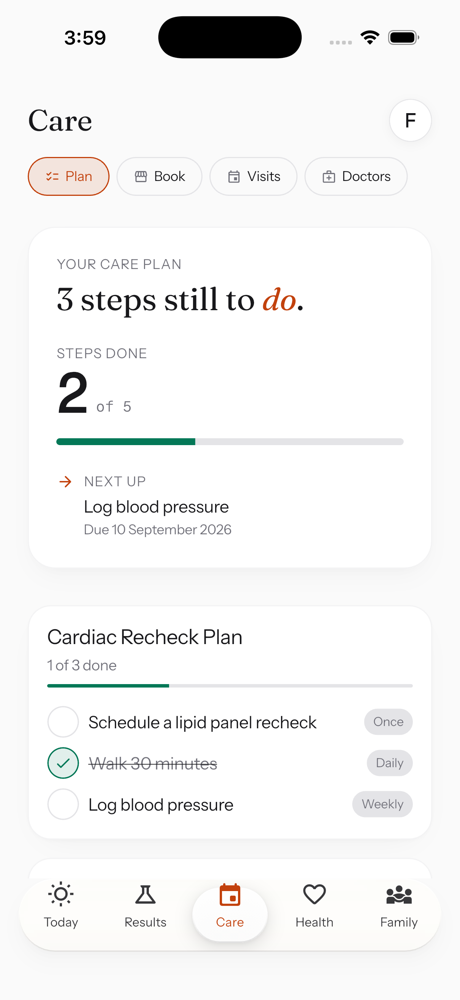
A doctor reviews and signs
- A rules engine drafts; the clinician edits and signs in the portal.
- The assistant runs behind a guardrail layer, and every exchange is audited.
- A plan the doctor has not signed is never sent.
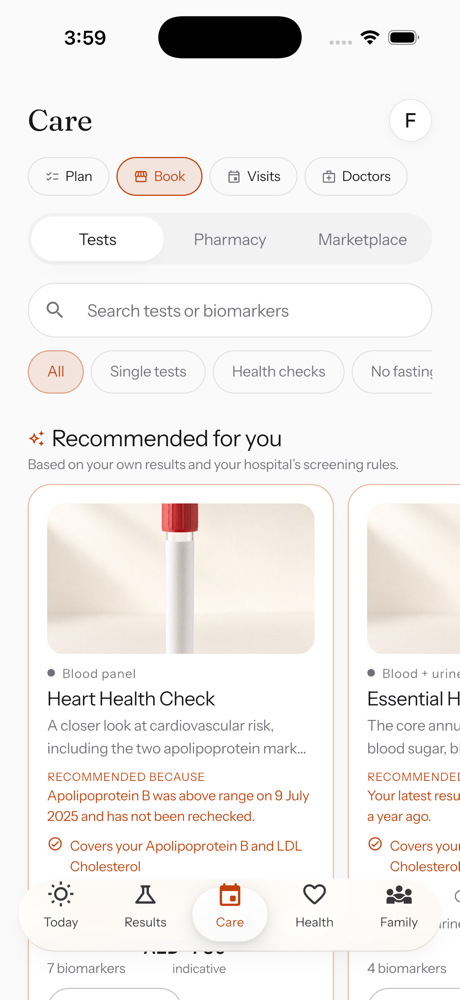
The next visit is booked
- Slots come from your own availability, at your own branches.
- A confirmed visit lands on the portal worklist.
- Each step writes to the append-only ledger the export is built from.
The difference
A follow-up today vs with Afiyah Wiqaya
Not new tests. The same result, followed to the end.
| A follow-up today | With Afiyah Wiqaya |
|---|---|
| A PDF in the portal | Every marker explained |
| A call centre reminder | A plan the doctor signed, on the phone |
| Nobody knows who came back | Every return counted, one row per patient |
| Reactive | Preventive |

Request a pilot
Start with one department
- Your existing patients, no acquisition spend
- Lab PDFs, or an HL7 or FHIR feed
- Every return counted, exportable
- Hosted in the UAE
No. We read what you already produce. A lab PDF is enough to start; an HL7 or FHIR feed is better. Booking uses your existing availability and branches.
Yours. The patient app is hospital-branded and multi-tenant, so your patients see your hospital, not us.
In the UAE. Patient stores and model inference stay in region, clinical records are append-only, and the database enforces tenant isolation with row-level security rather than trusting application code.
By the ledger. Every funnel action is written in the same transaction as the change that caused it, so the funnel and the raw export cannot disagree. You can also hold out a share of patients and compare.
